TaC Coating Preparation Process
Tantalum carbide (TaC) ceramics possess a melting point of up to 3,880°C and exhibit exceptional hardness, with a Mohs hardness rating of 9 to 10. They feature high thermal conductivity (22 W·m⁻¹·K⁻¹), significant bending strength (340-400 MPa), and a low thermal expansion coefficient (6.6 × 10⁻⁶ K⁻¹). Additionally, TaC ceramics demonstrate excellent thermochemical stability and outstanding physical properties, along with good chemical and mechanical compatibility with graphite and carbon/carbon (C/C) composites.
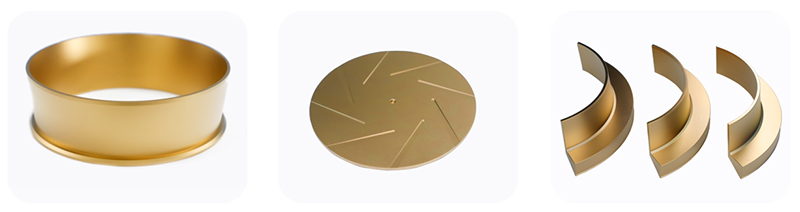
As a result, TaC coatings are widely utilized in various applications, including aerospace thermal protection, single crystal growth, energy electronics, and medical devices. TaC-coated graphite offers superior chemical corrosion resistance compared to bare graphite or silicon carbide (SiC)-coated graphite. It remains stable at high temperatures of up to 2,600°C and does not react with many metallic elements.
TaC coatings are regarded as the best in third-generation semiconductor single crystal growth and wafer etching processes. They significantly enhance the control of temperature and impurities during these processes, leading to the production of high-quality silicon carbide (SiC) wafers and related epitaxial wafers. These coatings are particularly well-suited for growing gallium nitride (GaN) or aluminum nitride (AlN) single crystals using metal-organic chemical vapor deposition (MOCVD) equipment, as well as for growing SiC single crystals using physical vapor transport (PVT) equipment. The quality of the resulting single crystals is notably improved with the use of TaC coatings.
The preparation methods for TaC coatings can be categorized into three main types: solid phase methods, liquid phase methods, and gas phase methods.
1. Solid Phase Methods: This includes reduction methods and chemical methods.
2. Liquid Phase Methods: This category encompasses molten salt methods, sol-gel methods, slurry-sintering methods, and plasma spraying methods.
3. Gas Phase Methods: This includes chemical vapor deposition (CVD), chemical vapor infiltration (CVI), and physical vapor deposition (PVD).
Each method has its own advantages and disadvantages. Among these, CVD is a well-established and widely used technique for preparing TaC coatings. With ongoing advancements in technology, new processes such as hot wire chemical vapor deposition and ion beam assisted chemical vapor deposition have emerged.
TaC coatings are often applied to carbon-based materials, including graphite, carbon fiber, and carbon/carbon composites. The methods for preparing TaC coatings on graphite include plasma spraying, CVD, and slurry sintering.
Advantages of the CVD Method:
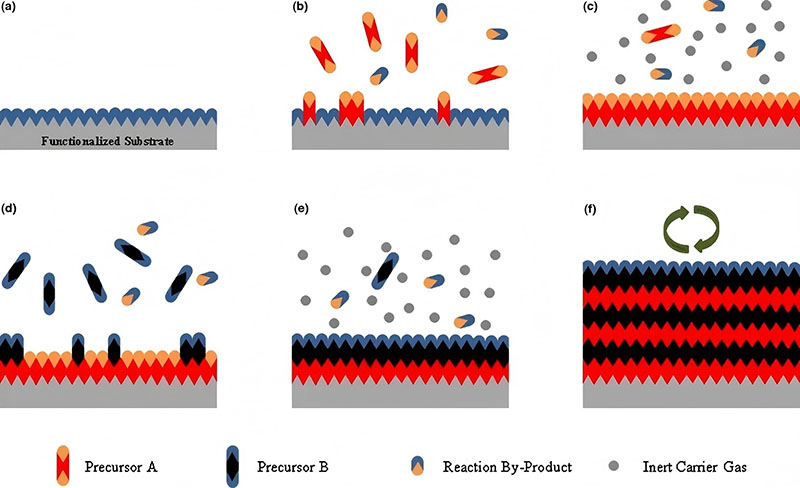
The CVD method utilizes tantalum halide (TaX5) as the tantalum source and hydrocarbons (CnHm) as the carbon source. Under specific conditions, these materials decompose into tantalum (Ta) and carbon (C) respectively and then react to form TaC coatings.
1. Lower Temperature: CVD can be performed at lower temperatures, which helps prevent defects and maintains mechanical properties that might otherwise deteriorate due to high-temperature treatments.
2. Controlled Composition and Structure: The CVD process enables the control of the coating's composition and structure, resulting in high purity, high density, and uniform thickness.
2. Controlled Composition and Structure: The CVD process enables the control of the coating's composition and structure, resulting in high purity, high density, and uniform thickness.
3. Design Flexibility: The composition and structure of TaC coatings produced through CVD can be specifically designed and easily adjusted, making it a preferred method for high-quality coatings.
Core Influencing Factors:
Several factors significantly influence the CVD process:
A. Gas Flow Rate: This refers to the flow rates of the tantalum source gas, hydrocarbon as the carbon source, carrier gases, dilution gases (e.g., Ar), and reducing gases (e.g., H2). Changes in the gas flow rate can significantly impact the temperature field, pressure field, and gas flow field inside the reaction chamber, affecting the coating's composition, structure, and performance. For example, increasing the argon (Ar) flow rate slows down the coating growth rate and reduces grain size. The molar mass ratio of TaCl5, H2, and C3H6 is critical, with a preferred H2 to TaCl5 ratio of about (15-20):1 and a theoretical TaCl5 to C3H6 ratio close to 3:1. Excessive amounts of TaCl5 or C3H6 can lead to the formation of Ta2C or free carbon, which negatively impacts the quality of the coating.
B. Deposition Temperature: Higher deposition temperatures result in faster deposition rates, larger grain sizes, and rougher coatings. The decomposition rates of hydrocarbons and TaCl5 differ, which can lead to the undesired formation of Ta2C at elevated temperatures. Higher deposition temperatures tend to increase particle size and change particle shapes from spherical to polyhedral. Additionally, while higher temperatures can speed up TaCl5 decomposition, they may also lead to increased stress in the coating, resulting in cracks. Conversely, lower deposition temperatures decrease coating deposition efficiency, increase deposition time, and raise raw material costs.
C. Deposition Pressure: Deposition pressure affects the free energy of the material's surface and influences the gas residence time in the reaction chamber. Increased deposition pressure provides more time for reactants to undergo nucleation reactions, resulting in larger particles and thicker coatings. Conversely, lower pressures shorten the gas residence time, slowing reaction rates and producing smaller particles and thinner coatings. However, deposition pressure has minimal effect on the crystal structure and composition of the coating.
This comprehensive understanding of the preparation methods and influencing factors will aid in optimizing the production of high-quality TaC coatings.
Semicorex offers high-quality Tantalum Carbide(TaC) coated parts for semiconductor industry. If you have any inquiries or need additional details, please don't hesitate to get in touch with us.
Contact phone # +86-13567891907
Email: sales@semicorex.com
Email: sales@semicorex.com
Why the side wall bend during dry etching
Applications of Gallium Nitride