TaC Crucible for PVT method to grow AlN crystal
The growth environment temperature for AlN crystals using the PVT (Physical Vapor Transport) method is quite high. The processes of gasification, gas phase transmission, and recrystallization of AlN occur within a relatively closed crucible. As a result, high temperature resistance, corrosion resistance, and long lifespan are critical factors for crucible materials used in AlN crystal growth.
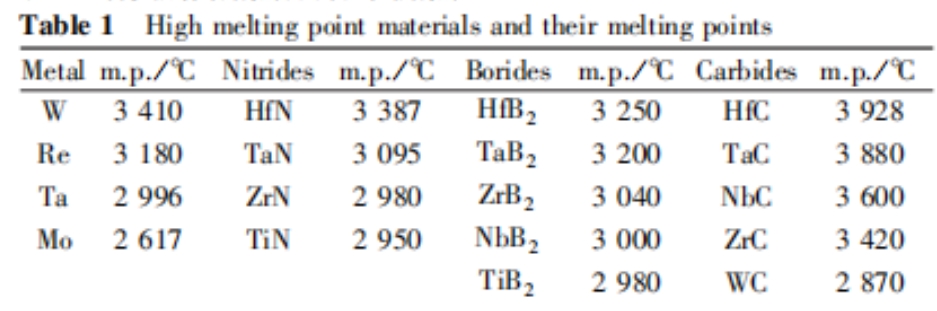
The initial experiments on AlN crystal growth were conducted using a graphite crucible, which led to a focus on exploring various feasible crucible materials. The selection of crucibles for AlN crystal growth must prioritize temperature resistance; therefore, only ultra-high melting point materials with melting points at or above 3000 °C can be considered.
Typically, there are two categories of ultra-high melting point materials: the first includes refractory metals such as tungsten (W), rhenium (Re), and tantalum (Ta). The second category comprises metal nitrides, borides, and carbides, such as zirconium (Zr), tantalum (Ta), and hafnium (Hf), which are referred to as ultra-high temperature ceramics (UHTCs). Additionally, graphite materials exhibit excellent heat resistance.
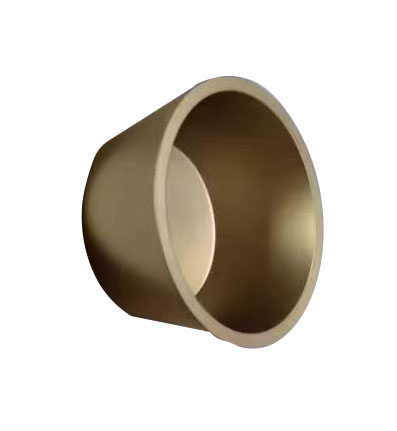
TaC Crucible
At present, the AlN crystal growth crucible materials that are actually put into use, in addition to W metal, are mainly concentrated on TaC materials. TaC and HfC are binary compounds with the highest melting point, with excellent physical and chemical properties, such as high melting point (3880℃), high Vickers hardness (>9.4GPa) and high elastic modulus; excellent thermal and electrical conductivity, chemical corrosion resistance (only soluble in a mixed solution of nitric acid and hydrofluoric acid) and good thermal shock resistance. There are two forms of TaC application in crucibles: one is TaC body crucible, and the other is as a protective coating for graphite crucibles. Directly using TaC ceramic powder for hot pressing is the simplest way to prepare TaC crucibles. Schlesser prepared a TaC crucible with a density of 96% and no pores through hot pressing sintering process, and the crucible wall thickness was about 6.3mm. The average life of the crucible exceeds 200 h, and it has been successfully reused in multiple growths. Experimental results show that the AlN crystals grown using this crucible show no measurable Ta contamination. The TaC crucible prepared by sintering can be used at a maximum temperature of 2300 °C. However, when used above 2200 °C, the TaC crucible will crack, resulting in a rapid decrease in its service life. Due to the ultra-high melting point, ultra-hardness, and low toughness of TaC ceramics, it is extremely difficult to sinter, form, and process them. TaC crucibles can be made by carbonizing the surface of a metal Ta crucible to form a TaC coating. U.S. Patent US 6,547,877 B2 details the process of converting Ta crucibles to TaC crucibles. TaC-Ta-TaC crucibles can be generated by performing segmented annealing in a carbon atmosphere. The TaC layer on the crucible surface is related to the annealing temperature, time and the structural characteristics of the Ta crucible itself. The thickness of TaC can reach more than 0.5 mm.
The TaC coating is known for its excellent resistance to high temperatures and ablation, leading to significant interest among material researchers in preparing TaC coatings on carbon-based substrates such as graphite, carbon fiber, and C/C composite materials. Several preparation methods for TaC coatings have been developed, including the sol-gel method, chemical vapor deposition (CVD) method, molten salt growth method, and slurry sintering method.
One effective technique for applying TaC coating to graphite crucibles is the brush sintering method, which utilizes TaC powder as the raw material. The preparation process involves the following steps:
1. TaC powder is mixed with an organic solvent, binder, and sintering agent to create a slurry.
2. This slurry is then applied to the surface of the graphite substrate through spraying or brushing.
3. The coated graphite sample is placed in an environment of 423 K (150 °C) for 30 minutes to evaporate the organic solvent within the coating.
4. Finally, the sample undergoes high-temperature treatment at 2300 K (2027 °C) in an argon atmosphere.
2. This slurry is then applied to the surface of the graphite substrate through spraying or brushing.
3. The coated graphite sample is placed in an environment of 423 K (150 °C) for 30 minutes to evaporate the organic solvent within the coating.
4. Finally, the sample undergoes high-temperature treatment at 2300 K (2027 °C) in an argon atmosphere.
The resulting TaC coating is dense, crack-free, and has a thickness of approximately 100 μm. The grains within the coating range in size from 10 to 50 μm and exhibit no preferential orientation, which effectively prevents the formation of through cracks.
Currently, the CVD method is the predominant technique for applying TaC coatings, as it yields a denser and more uniform coating.
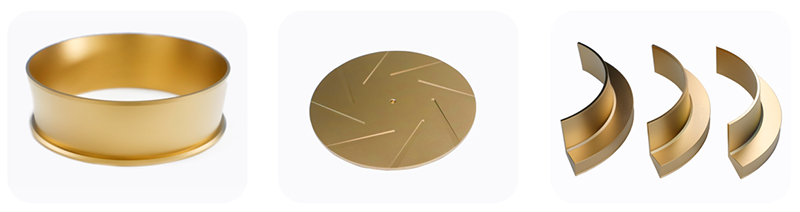
Semicorex offers high-quality CVD TaC coating parts, meet the highest performance standards with precision and reliability. If you have any inquiries or need additional details, please don't hesitate to get in touch with us.
Contact phone # +86-13567891907
Email: sales@semicorex.com
Email: sales@semicorex.com
Crystal Growth in Chip Manufacturing - Crystalline Control
What is the unit Angstrom