Semicorex | Innovative technology for Isostatic Graphite
2024-11-15
High-performance isostatic graphite materials are crucial in various high-end industrial manufacturing sectors and serve as essential foundational materials for advancing the third-generation semiconductor industry, particularly silicon carbide (SiC).
Producing high-performance isostatic graphite involves multiple complex stages, including raw material selection, powder production, mixing, kneading, molding, roasting, impregnation, and graphitization. Controlling the details of these processes and meeting technical requirements presents significant challenges for manufacturers.
Isostatic graphite materials are pivotal for the production of silicon carbide semiconductors, utilized in critical processes such as silicon carbide crystal growth and epitaxy. The performance and quality of these materials significantly influence the quality (defect control), specifications, and grades of silicon carbide crystals.
Focus on the One-Step Method
Unlike the traditional method for producing graphite materials, Semicorex employs a “One-Step Method” (self-sintering method) to create high-performance graphite materials that conform to the standards of the world's most advanced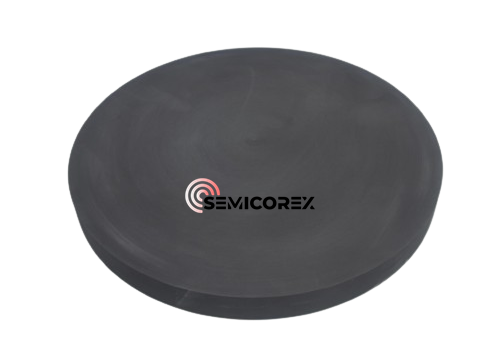 products.
 products.
 The “One-Step Method” manufacturing process consists of only four steps: customized preparation of raw materials, isostatic pressing, roasting, and graphitization. This streamlined approach eliminates the complex and time-consuming steps of powdering, kneading, and impregnating found in traditional methods. Consequently, the production cycle for graphite materials is significantly shortened, completing in as little as two months—about one-third to one-quarter of the time required by traditional processes.
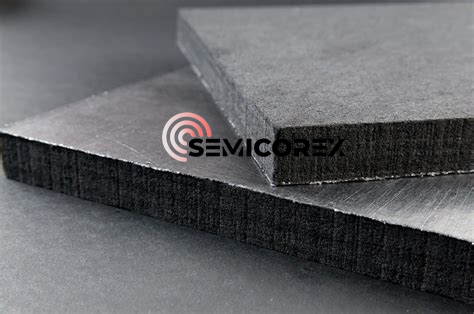
Graphite produced using this self-sintering method features a smooth, delicate cross-section with few defects and high interface bonding strength. It is capable of achieving ultra-high density, strength, and fine pore structure, while also maximizing the homogeneity and consistency of the final product.
The significant enhancements in structure and quality resulting from the one-component production process necessitate a high technical threshold. Key considerations include:
1. Strict control of the physical properties of the raw materials.
2. Avoiding internal stress during the molding process.
3. Managing the controlled release of decomposition products during the roasting phase while addressing internal stress caused by volume shrinkage during sintering.
4. Ensuring homogeneity and consistency by regulating the uniformity of the temperature field during roasting and graphitization.
2. Avoiding internal stress during the molding process.
3. Managing the controlled release of decomposition products during the roasting phase while addressing internal stress caused by volume shrinkage during sintering.
4. Ensuring homogeneity and consistency by regulating the uniformity of the temperature field during roasting and graphitization.
This engineered graphite material supports SiC crystal growth and serves as a thermal field material, ensuring a stable thermal environment. This stability helps to produce SiC crystals with minimal defects and high quality. Additionally, its excellent resistance to silicon vapor corrosion enhances durability and extends the service life of thermal field graphite components, ultimately reducing the costs of consumables needed for SiC crystal production.
Typically, the thermal expansion coefficient of the graphite substrate ranges from (4.2-4.5) x 10⁻⁶, which closely matches that of SiC coatings, making it suitable for SiC-coated components. However, during SiC crystal growth and epitaxy, TaC-coated graphite components with superior temperature resistance are required; the thermal expansion coefficient of the TaC coating is as high as 6.3, necessitating a graphite substrate that aligns with this expansion rate.
Semicorex has developed a new generation of graphite substrates for TaC coatings with a thermal expansion coefficient of 6.0-6.3. This product is highly compatible with TaC coatings, greatly enhancing the structural stability of the coating and extending the lifespan of coated components. It has received excellent reviews from downstream customers regarding its application.
Moreover, the graphite's high thermal shock resistance, which results from its high strength and thermal conductivity, ensures structural stability and durability. This innovative graphite substrate is expected to excel in the realm of TaC-coated graphite parts in the future.
A Silicon Carbide Crystal Growth Device That Prevents Premature
Emerging Trends in SiC Ceramics for Semiconductor Innovation
Related Article
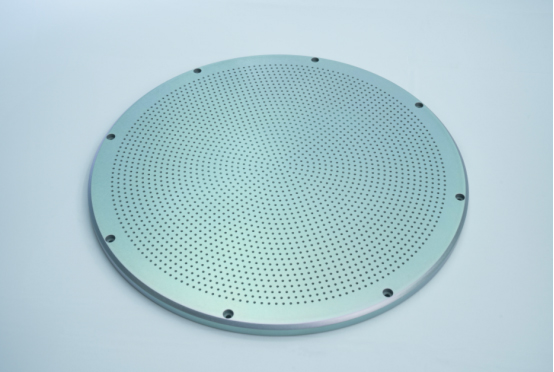
The gas distribution plate can also be translated as a shower head. It looks like a shower head, but its price can be as high as hundreds of thousands, which is much higher than the shower head in your bathroom.
The Showerheads of the Semiconductor Industry
Graphite is a high-energy crystalline carbon material known for its unique structure and properties such as electrical and thermal conductivity, lubrication, high-temperature resistance, and chemical stability.
Purification Methods of Graphite Materials