Emerging Trends in SiC Ceramics for Semiconductor Innovation
2024-11-08

SiC ceramics are transforming the semiconductor industry with their remarkable properties. These materials demonstrate superior hardness and thermal conductivity, making them perfect for high-temperature applications. The process of thermal annealing in SiC ceramics plays a crucial role in enhancing their performance by facilitating diffusion, which is essential for semiconductor applications. SiC ceramics improve energy efficiency and reduce the weight of electronic devices, which is vital for power electronics and renewable energy systems. The market for SiC semiconductors is expected to grow at a CAGR of 8% from 2024 to 2031, fueled by strong demand and increased investments in research and development. Understanding these advancements is essential for fully leveraging the potential of SiC ceramics in semiconductor innovation.
Understanding SiC Ceramics in Semiconductor Technology
The Role of SiC Ceramics
Properties and Characteristics
Silicon carbide (SiC) ceramics possess unique properties that make them indispensable in semiconductor technology. Their exceptional hardness and high thermal conductivity allow them to withstand extreme conditions, making them ideal for high-temperature applications. SiC ceramics exhibit excellent chemical stability, which ensures durability and longevity in various environments. These characteristics enable SiC ceramics to play a crucial role in enhancing the performance of semiconductor devices.
Applications in Semiconductor Devices
SiC ceramics find extensive applications in semiconductor devices due to their remarkable properties. They are used in power electronics, where they improve energy efficiency and reduce heat generation. SiC ceramics also facilitate the miniaturization of electronic components, allowing for more compact and efficient designs. In renewable energy systems, SiC ceramics contribute to the development of advanced power converters and inverters, enhancing overall system performance.
Historical Context and Evolution
Early Uses and Developments
The journey of SiC ceramics in semiconductor technology began with their early uses in abrasive materials and cutting tools. Their hardness and thermal resistance made them suitable for these applications. Over time, researchers recognized the potential of SiC ceramics in the semiconductor industry, leading to further exploration and development.
Transition to Modern Applications
The transition from early uses to modern applications of SiC ceramics marked a significant evolution in semiconductor technology. Recent advancements in SiC technology have gained momentum, particularly in electric vehicles and high-end semiconductors. These developments have expanded the scope of SiC ceramics, enabling their integration into cutting-edge semiconductor devices. The process of thermal annealing in SiC ceramics has further enhanced their performance by facilitating diffusion, which is essential for semiconductor applications.
Recent Technological Advancements in SiC Ceramics
Innovations in Material Composition
Enhanced Thermal Conductivity
Recent advancements in the material composition of SiC ceramics have significantly improved their thermal conductivity. Researchers have focused on optimizing the dispersion of SiC particles to enhance heat transfer capabilities. This optimization process involves precise control over the size and distribution of SiC particles, which results in a more uniform structure. The improved thermal conductivity of SiC ceramics allows them to efficiently dissipate heat, making them ideal for high-temperature semiconductor applications. This property is particularly beneficial in power electronics, where managing heat is crucial for device performance and longevity.
Improved Electrical Properties
In addition to thermal conductivity, SiC ceramics have seen improvements in their electrical properties. By refining the composition of SiC materials, scientists have achieved better electrical conductivity and reduced energy losses. These enhancements are achieved through advanced sintering techniques that promote the formation of a dense and uniform microstructure. The improved electrical properties of SiC ceramics enable their use in high-frequency and high-power semiconductor devices. This makes them a preferred choice for applications requiring efficient energy conversion and transmission.
Manufacturing and Processing Techniques
Advances in Fabrication Methods
The manufacturing and processing techniques of SiC ceramics have evolved significantly, leading to more efficient production methods. Additive manufacturing technologies, such as Direct and Indirect Additive Manufacturing, have revolutionized the fabrication of SiC ceramics. These methods allow for the creation of complex geometries and intricate designs that were previously challenging to achieve. Selective laser sintering, a form of additive manufacturing, has been particularly effective in optimizing the performance of SiC/Si composite ceramics. This technique enables precise control over the material's microstructure, resulting in enhanced mechanical properties and performance.
Cost-Effective Production Solutions
Cost-effective production solutions have emerged as a key focus in the advancement of SiC ceramics. Researchers have developed innovative sintering processes that reduce production costs while maintaining high-quality standards. Reaction-sintered silicon carbide, for example, offers a cost-efficient approach to producing SiC ceramics with excellent physical and mechanical properties. These advancements in manufacturing techniques not only lower production costs but also increase the accessibility of SiC ceramics for various semiconductor applications. As a result, the semiconductor industry can leverage these cost-effective solutions to drive innovation and growth.
Benefits and Challenges of SiC Ceramic Advancements
Advantages in Semiconductor Performance
Increased Efficiency and Reliability
Silicon carbide (SiC) ceramics significantly enhance the efficiency and reliability of semiconductor devices. Their superior thermal conductivity and stability allow them to perform exceptionally well in high-temperature environments. SiC ceramics dissipate heat more effectively than traditional materials, reducing the risk of overheating and extending the lifespan of electronic components. This capability is crucial for high-power applications, where maintaining optimal operating temperatures is essential for device performance and longevity.
Miniaturization and Integration
SiC ceramics facilitate the miniaturization and integration of semiconductor devices. Their remarkable strength and thermal resistance enable the development of smaller, more compact electronic components without compromising performance. This miniaturization trend supports the creation of advanced semiconductor devices that are both efficient and space-saving. As a result, SiC ceramics play a pivotal role in the ongoing evolution of semiconductor technology, allowing for more innovative and integrated solutions.
Challenges and Limitations
Technical and Economic Barriers
Despite their advantages, SiC ceramics face several technical and economic barriers. The production of SiC ceramics involves complex manufacturing processes that can be costly and time-consuming. These challenges can hinder the widespread adoption of SiC ceramics in the semiconductor industry. Additionally, the need for specialized equipment and expertise further complicates the production process, making it difficult for some manufacturers to implement SiC ceramic solutions effectively.
Environmental and Sustainability Concerns
Environmental and sustainability concerns also pose challenges for SiC ceramic advancements. The production of SiC ceramics requires significant energy consumption, which can contribute to environmental impacts. Moreover, the disposal of SiC ceramic waste presents sustainability issues, as these materials are not easily recyclable. Addressing these concerns requires ongoing research and development efforts to create more sustainable production methods and recycling solutions for SiC ceramics.
Future Trends and Applications in the Semiconductor Industry
Emerging Applications of SiC Ceramics
Power Electronics and Energy Systems
Silicon carbide (SiC) ceramics are revolutionizing power electronics and energy systems. Their superior thermal conductivity and mechanical strength make them ideal for high-power applications. SiC ceramics enhance energy efficiency by reducing heat generation and improving thermal management. This capability is crucial in power converters and inverters, where efficient energy conversion is essential. Various experts in the semiconductor high-performance ceramics market highlight SiC ceramics' ability to withstand high temperatures and rapid thermal cycling, making them indispensable in modern energy systems.
High-Frequency and High-Temperature Devices
SiC ceramics are gaining traction in high-frequency and high-temperature devices. Their unique properties, such as high thermal conductivity and corrosion resistance, enable them to perform reliably in extreme conditions. These characteristics make SiC ceramics suitable for applications in aerospace and automotive industries, where high-frequency operations are common. The integration of SiC ceramics in these devices enhances their performance and longevity, providing a competitive edge in the semiconductor industry.
Potential Impact on Industry Growth
Market Trends and Predictions
The demand for SiC ceramics in the semiconductor industry is on the rise. Market trends indicate a significant growth trajectory, driven by the increasing need for high-performance materials. SiC ceramics offer unparalleled opportunities across various sectors, including aerospace, automotive, and energy. The global silicon carbide market is projected to grow significantly, reflecting strong demand and investment in research and development. This growth is expected to fuel innovation and drive the adoption of SiC ceramics in cutting-edge semiconductor applications.
Research and Development Directions
Research and development efforts are focused on enhancing the properties and applications of SiC ceramics. Scientists are exploring new material compositions and manufacturing techniques to improve the performance and cost-effectiveness of SiC ceramics. Innovations in additive manufacturing and sintering processes are paving the way for more efficient production methods. These advancements are crucial for overcoming technical and economic barriers, ensuring the widespread adoption of SiC ceramics in the semiconductor industry. Continued investment in research and development will play a pivotal role in shaping the future of SiC ceramics and their impact on industry growth.
We at Semicorex specialize in SiC Ceramics and other Ceramic Materials applied in semiconductor manufacturing, if you have any inquiries or need additional details, please don't hesitate to get in touch with us.
Contact phone: +86-13567891907
Email: sales@semicorex.com
Semicorex | Innovative technology for Isostatic Graphite
What Challenges Arise in the Etching Process?
Related Article
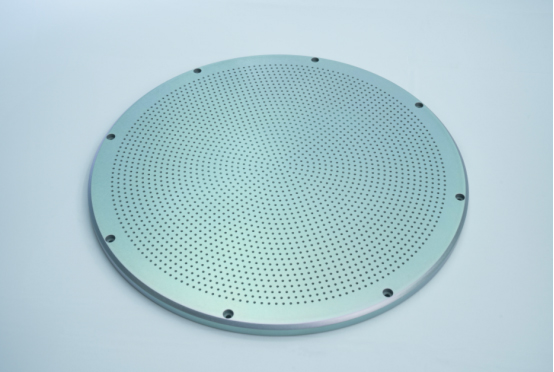
The gas distribution plate can also be translated as a shower head. It looks like a shower head, but its price can be as high as hundreds of thousands, which is much higher than the shower head in your bathroom.
The Showerheads of the Semiconductor Industry
Graphite is a high-energy crystalline carbon material known for its unique structure and properties such as electrical and thermal conductivity, lubrication, high-temperature resistance, and chemical stability.
Purification Methods of Graphite Materials