Isostatic Graphite: A High-Performance Material for Demanding Applications
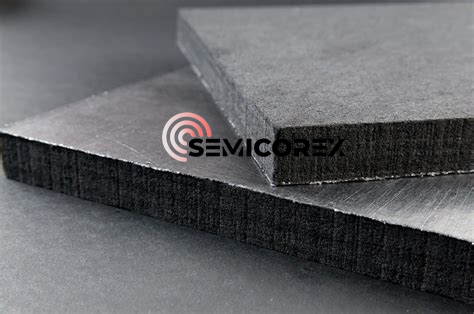
Isostatic graphite is a specialized form of graphite characterized by its exceptional strength, density, and purity – often referred to as “three highs graphite.” This material is produced using the isostatic pressing technique, where a uniform pressure is applied to the graphite powder through a liquid or gas medium during the molding process. This method yields several advantages over conventional graphite forming methods, resulting in:
-
Large Component Sizes: Isostatic pressing allows for the production of large-sized graphite components, expanding design possibilities.
-
Homogeneous Microstructure: The uniform pressure distribution during forming ensures a homogeneous microstructure with consistent properties throughout the material.
-
Enhanced Density and Strength: Isostatic graphite exhibits significantly higher density and mechanical strength compared to conventionally formed graphite.
-
Isotropic Properties: A key characteristic of isostatic graphite is its isotropy, meaning its properties remain consistent regardless of direction, size, shape, or sampling orientation. This predictability is crucial for demanding applications.
Exceptional Properties of Isostatic Graphite
Isostatic graphite possesses a range of remarkable properties that make it suitable for a wide range of demanding applications:
-
High-Temperature Resistance: Its mechanical strength increases with temperature in inert atmospheres, reaching a maximum around 2500°C.
-
Fine and Uniform Structure: Compared to standard graphite, isostatic graphite exhibits a finer, denser, and more uniform microstructure.
-
Low Thermal Expansion and High Thermal Shock Resistance: It minimizes dimensional changes and withstands rapid temperature fluctuations without degradation.
-
Chemical Inertness: It demonstrates strong resistance to corrosion and penetration by molten metals and glass, ensuring long-term performance in challenging environments.
-
Excellent Electrical and Thermal Conductivity: Isostatic graphite efficiently transfers both heat and electricity, making it suitable for applications requiring thermal management or electrical conductivity.
-
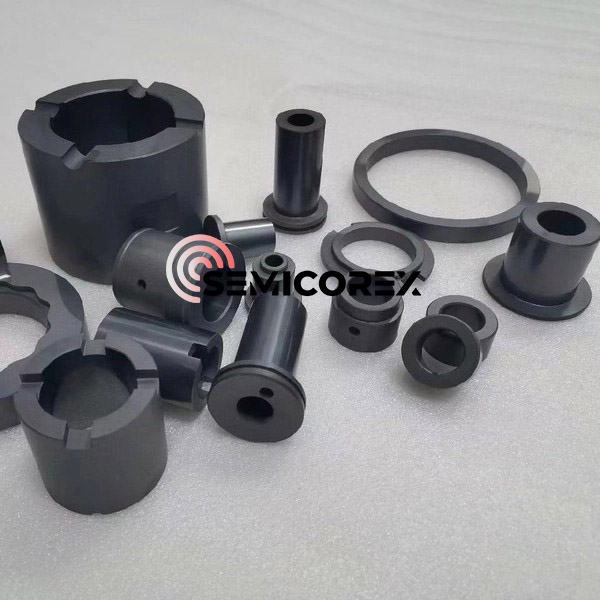
Exceptional Machinability: It can be precisely machined into complex shapes with tight tolerances, enabling the creation of intricate components.
Wide-Ranging Applications of Isostatic Graphite
Due to its exceptional combination of properties, isostatic graphite is widely employed in a diverse range of high-performance applications, including:
-
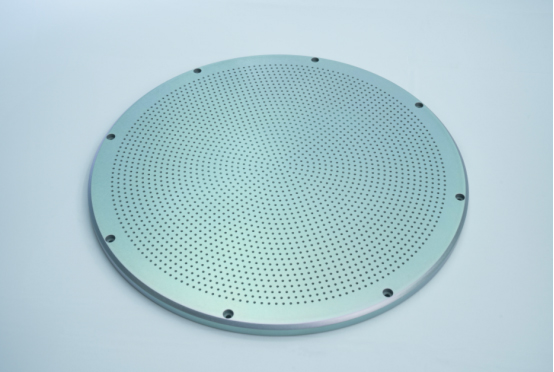
Semiconductor Industry: Crucibles, heaters, baffles, and insulation components for Czochralski (CZ) crystal growth furnaces and polysilicon melting furnaces.
-
Compound Semiconductor Manufacturing: Heaters and crucibles for compound semiconductor crystal growth.
-
Aerospace: Rocket ignition electrodes, nozzles, fins, and structural components demanding high strength and thermal resistance.
-
Nuclear Industry: Reactor core structures and components requiring high purity and structural integrity.
-
Electrical Discharge Machining (EDM): High-precision electrodes for EDM processes, leveraging its electrical conductivity and wear resistance.
-
Continuous Casting: Graphite crystallizers for metal casting, taking advantage of its high thermal conductivity and resistance to molten metals.
Advantages of Isostatic Pressing Technology
Isostatic pressing technology offers significant advantages compared to conventional forming techniques, resulting in superior material properties and expanded design possibilities. Key advantages include:
Enhanced Density and Uniformity:
-
Higher Density: Isostatic pressing achieves significantly higher product densities compared to uniaxial or biaxial pressing methods—typically 5-15% greater. Hot isostatic pressing (HIP) can achieve even higher relative densities, approaching 99.8-99.99%.
-
Exceptional Uniformity: Conventional pressing methods often result in uneven density distributions due to friction between the powder, mold, and tooling. This variation can exceed 10%, especially in complex shapes. Isostatic pressing utilizes a fluid medium to transmit pressure uniformly in all directions, minimizing density gradients to less than 1%. This uniformity ensures consistent material properties throughout the component.
Expanded Design Freedom and Process Simplification:
-
Unrestricted Length-to-Diameter Ratios: Isostatic pressing allows for the production of components with high length-to-diameter ratios, making it ideal for manufacturing rods, tubes, and other elongated shapes that are challenging to produce with conventional methods.
-
Elimination of Lubricants: The uniform pressure distribution in isostatic pressing eliminates the need for lubricants in the powder mix, reducing potential contamination and simplifying the manufacturing process.
Superior Performance and Versatility:
-
Enhanced Material Properties: Products formed through isostatic pressing exhibit superior mechanical properties, including higher strength, improved wear resistance, and enhanced isotropy.
-
Shorter Production Cycles: The efficient compaction process and reduced post-processing requirements contribute to shorter lead times and increased productivity.
-
Broad Application Range: Isostatic pressing’s versatility lends itself to a wide range of applications, from intricate ceramic components to large-scale aerospace structures.
Characteristics of Isostatic Graphite Materials
Isostatic graphite materials exhibit several key characteristics that differentiate them from conventionally processed graphite, making them ideal for demanding applications requiring high performance and consistency.
1. Isotropy: Uniform Properties in All Directions
A defining feature of isostatic graphite is its high degree of isotropy – meaning its properties remain consistent regardless of direction, shape, size, or sampling orientation. This is in contrast to traditionally processed graphite, which often exhibits significant anisotropy, with properties varying considerably along different axes.
This difference arises from the distinct forming methods. Conventional graphite processing, like extrusion or molding, imparts directional pressure, resulting in varying degrees of alignment and density along different axes. Conversely, isostatic pressing utilizes uniform pressure transmission through a fluid medium, ensuring homogeneous material structure and consistent properties in all directions.
The degree of isotropy is often quantified using an anisotropy ratio, calculated by dividing the minimum measured property value by the maximum value along different axes. A lower ratio indicates higher isotropy.
-
Isotropic Graphite: Anisotropy ratio of 1.0-1.1
-
Near-Isotropic Graphite: Anisotropy ratio of 1.1-1.2
-
Anisotropic Graphite: Anisotropy ratio greater than 1.2
While anisotropy is desirable in some applications (e.g., graphite electrodes for steelmaking), many modern technologies demand isotropic properties for optimal performance. Examples include:
-
Electrical Discharge Machining (EDM): Isotropic graphite ensures consistent electrode wear and surface finish regardless of machining direction.
-
Single Crystal Silicon Growth Furnaces: Isotropic graphite components minimize thermal gradients and ensure uniform crystal growth.
2. Large Component Fabrication
Market demand for larger graphite components continues to increase. This trend is evident in various sectors:
-
Semiconductor Industry: As silicon wafer sizes increase (e.g., from 6-inch to 12-inch diameter), so does the demand for larger graphite components in crystal growth furnaces.
-
EDM Applications: Large-scale EDM processes require larger graphite electrodes for efficient material removal.
-
Continuous Casting: Larger graphite components are crucial for handling increased molten metal volumes.
-
Nuclear Industry: Reactor components often require large-scale graphite structures.
Traditional forming methods like molding and extrusion face limitations in producing large-sized components. Isostatic pressing, however, is well-suited for large-scale fabrication, offering greater flexibility and scalability. A key challenge in large component manufacturing is cracking during the high-temperature baking process, which becomes more pronounced with increasing size. Isostatic pressing minimizes this risk due to the uniform density and reduced internal stresses within the formed components.
3. Fine Microstructure for Enhanced Performance
Fine-grained graphite structures are desirable for achieving enhanced mechanical and thermal properties.
-
Improved Mechanical Strength: Smaller graphite particles lead to a denser, more compact microstructure, resulting in higher strength and hardness.
-
Enhanced Oxidation Resistance: A finer microstructure reduces the surface area exposed to oxidizing agents, enhancing material longevity at high temperatures.
However, achieving a fine microstructure while maintaining other desirable properties presents challenges:
-
Increased Binder Demand: Smaller particles have a higher surface area, requiring a higher binder content for effective bonding. This can increase manufacturing costs and potentially hinder graphitization during heat treatment.
-
Uniform Binder Distribution: Ensuring uniform binder distribution becomes more challenging with finer powders, potentially leading to inconsistencies in the final product.
Isostatic Graphite Manufacturing Process
The production of isostatic graphite involves a series of carefully controlled steps, from raw material preparation to final graphitization, to achieve the desired material properties and quality.
1. Raw Materials and Crushing
Raw Material: Needle coke, a specialized petroleum coke with low sulfur, ash, and volatile content, serves as the primary raw material for isostatic graphite. It offers several advantages:
-
High Degree of Graphitization: Needle coke’s unique structure facilitates efficient graphitization during heat treatment, resulting in a highly ordered graphite structure.
-
Low Electrical Resistivity: The highly graphitized structure contributes to excellent electrical conductivity.
-
Smooth Surface Finish: Needle coke-based graphite exhibits inherent lubricity and can achieve a smooth surface finish.
Petroleum coke is a byproduct of crude oil refining, derived from the thermal cracking of heavy residues. It primarily consists of carbon (over 80%), along with trace amounts of hydrogen, oxygen, nitrogen, sulfur, and metallic elements.
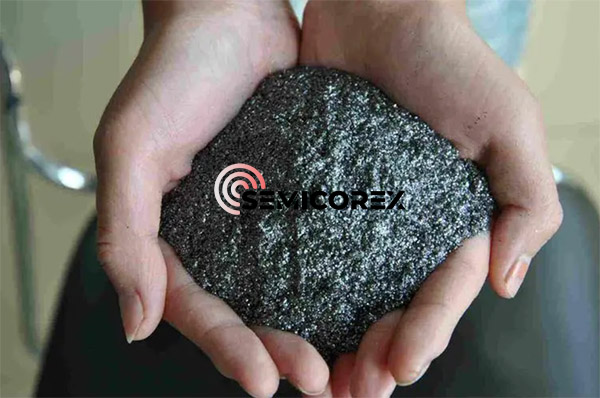
Crushing and Grinding: The raw needle coke undergoes crushing and grinding to achieve the desired particle size distribution.
-
Coarse Crushing: Initial size reduction is achieved using conventional crushing equipment commonly employed in metallurgical industries.
-
Fine Grinding: Achieving the fine particle sizes required for high-performance isostatic graphite necessitates specialized grinding techniques, such as air jet milling, to produce particles in the micrometer range.
-
Particle Size Control:
-
Standard High-Density Graphite: Primarily utilizes particles around 75 µm, with a portion below 42 µm or even 37 µm for enhanced properties.
-
Ultra-Fine Graphite: Requires particles smaller than 20 µm, demanding stringent control over grinding and classification processes.
-
2. Mixing and Kneading
Precise Formulation: The carefully sized needle coke powder is combined with a binder material in precise proportions. Common binders include coal tar pitch, asphalt, or specialized resins.
Homogeneous Mixing: Thorough and uniform mixing of the coke powder and binder is critical for achieving consistent density and properties in the final graphite product. This step directly impacts product yield and performance.
Mixing Equipment: Various mixers are employed, each offering specific advantages:
-
Double-Arm Mixers: Provide robust mixing for high-viscosity materials.
-
Single-Arm Mixers: Offer efficient mixing for lower-viscosity formulations.
-
Counter-Flow High-Speed Mixers: Preferred for specialized graphite production, these mixers ensure rapid and homogeneous blending.
Controlling Mixing Parameters: Carefully controlled mixing parameters are crucial for optimal results:
-
Temperature Profiles: Precise temperature control during mixing influences binder viscosity and homogeneity.
-
Mixing Time: Sufficient mixing time ensures complete binder dispersion and uniform particle coating.
Sheet Rolling: After mixing, the paste undergoes sheet rolling using a calendering mill to further enhance binder-coke interaction and achieve a uniform sheet thickness (typically 1-3 mm). Multiple rolling passes may be employed.
Final Grinding: The rolled sheets are then ground into a fine powder using a pulverizer to prepare the material for isostatic pressing.
3. Isostatic Pressing
Cold Isostatic Pressing (CIP): Isostatic graphite utilizes cold isostatic pressing, where the prepared powder mixture is encased in a flexible mold and subjected to high pressure transmitted through a fluid medium. This process ensures uniform compaction and a homogeneous density distribution within the formed component.
Multiple Baking and Impregnation Cycles: The CIP-formed graphite undergoes multiple cycles of baking and impregnation to achieve the desired density and properties.
-
Baking: Removes volatile components from the binder, enhancing the material’s integrity.
-
Impregnation: Involves infiltrating the porous graphite structure with a resin or pitch-based impregnant, further increasing density and improving mechanical properties.
4. Baking and Impregnation
Controlled Baking:
-
Slow Heating Rates: Graphite components requiring high bulk density are susceptible to cracking during baking. Therefore, slow and controlled heating rates are essential to minimize thermal stresses.
-
Protective Packaging: Smaller components are often packed in containers filled with inert filler materials to provide support and prevent deformation during baking.
Effective Impregnation:
-
Impregnant Selection: The choice of impregnant is crucial, with the softening point (related to viscosity) being a key parameter. A lower softening point ensures good penetration into the porous graphite structure.
-
Process Optimization: Controlling parameters like preheating temperature, impregnation temperature and pressure, vacuum levels, and impregnation time are essential for achieving optimal impregnation and achieving the desired density.
Multiple Cycles: Achieving high-density graphite often requires 2-4 impregnation cycles, each followed by a baking step to cure the impregnant. This iterative process, while time-consuming (typically 2-3 months), is crucial for achieving the desired material properties.
5. Graphitization and Purification
High-Temperature Transformation: The baked and impregnated carbon material undergoes a high-temperature heat treatment (2000-3000°C) in a graphitization furnace. This process transforms the disordered carbon structure into a highly ordered, layered graphitic structure, significantly enhancing electrical and thermal conductivity, as well as mechanical properties.
Purification during Graphitization:
Graphitization Furnaces:
Anode Loading: In anode manufacturing, the crucible method is the predominant loading technique for graphitization furnaces in the industry.
Structural Transformation: During graphitization, organic compounds in the binder decompose, with C=S and C=O bonds breaking down and forming volatile sulfides and oxides. Halogen treatment removes residual metallic impurities, resulting in a highly purified and graphitized material.
-
Baking: Removes volatile components from the binder, enhancing the material’s integrity.
-
Impregnation: Involves infiltrating the porous graphite structure with a resin or pitch-based impregnant, further increasing density and improving mechanical properties.
-
Slow Heating Rates: Graphite components requiring high bulk density are susceptible to cracking during baking. Therefore, slow and controlled heating rates are essential to minimize thermal stresses.
-
Protective Packaging: Smaller components are often packed in containers filled with inert filler materials to provide support and prevent deformation during baking.
-
Impregnant Selection: The choice of impregnant is crucial, with the softening point (related to viscosity) being a key parameter. A lower softening point ensures good penetration into the porous graphite structure.
-
Process Optimization: Controlling parameters like preheating temperature, impregnation temperature and pressure, vacuum levels, and impregnation time are essential for achieving optimal impregnation and achieving the desired density.
-
Halogen Treatment: Chlorine or fluorine gas is introduced during graphitization to react with impurities, forming volatile chlorides and fluorides that are removed from the furnace. This purification step enhances the purity and performance of the final graphite product.
-
Safety Considerations: Halogen gases are toxic and require stringent safety protocols and environmental controls.
-
Acheson Furnaces: Traditional graphitization furnaces.
-
Tandem Furnaces: Offer higher efficiency and are becoming increasingly common.
-
Vacuum Graphitization Furnaces: Enable the production of high-purity graphite.
-
Continuous and Box Furnaces: Provide alternative graphitization methods.
Anode Loading: In anode manufacturing, the crucible method is the predominant loading technique for graphitization furnaces in the industry.
- Structural Transformation: During graphitization, organic compounds in the binder decompose, with C=S and C=O bonds breaking down and forming volatile sulfides and oxides. Halogen treatment removes residual metallic impurities, resulting in a highly purified and graphitized material.
We at Semicorex specialize in SiC/TaC coated graphite products and CVD SiC technology applied in semiconductor manufacturing, if you have any inquiries or need additional details, please don't hesitate to get in touch with us.
Contact phone: +86-13567891907
Email: sales@semicorex.com
Happy Mid-Autumn Festival
Plasma Etching: A Comprehensive Overview
Related Article