Multi-applications of silicon carbide ceramics
2025-04-15
Silicon carbide ceramics have been widely used in many fields due to their high hardness, excellent corrosion resistance and high high temperature strength.
1.Sealing rings
Silicon carbide ceramics have excellent chemical corrosion resistance, high strength, high hardness, excellent wear resistance, low friction coefficient, and can withstand high temperatures. These characteristics make it an excellent material for manufacturing sealing rings. When it is paired with graphite materials, the friction coefficient produced is smaller than that of alumina ceramics and cemented carbide, so it is particularly suitable for working conditions with high PV values, especially in environments where strong acids and alkalis are transported. SIC-1 type silicon carbide pressure-sintered products have the advantages of high density, high hardness, large-scale production, and the ability to manufacture products with complex shapes. They are very suitable for high-performance seals, especially under high PV values and working conditions that require resistance to strong acids and alkalis. SIC-3 type silicon carbide ceramic products are silicon carbide materials containing graphite. Because a large number of fine graphite particles are evenly dispersed in the silicon carbide matrix, when it is used in pairs with other materials, the friction coefficient is extremely small and exhibits good self-lubricating properties. It is particularly suitable for making air seals or seals with dry friction conditions, effectively extending the service life of the seals and improving the reliability of the work.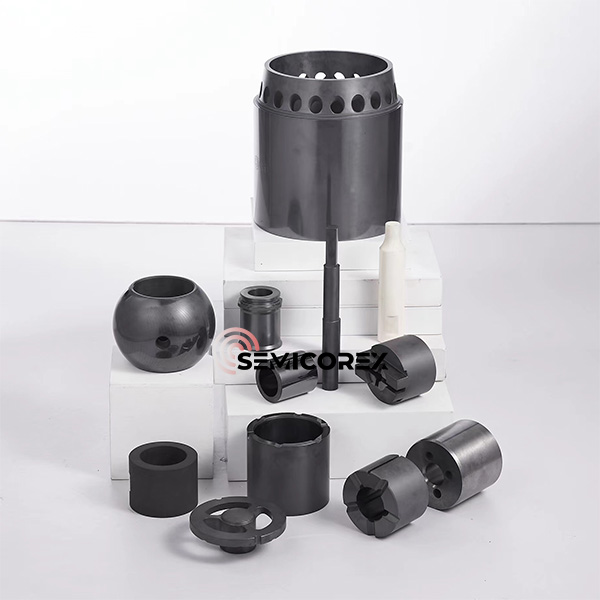
Silicon carbide ceramics have excellent chemical corrosion resistance, high strength, high hardness, excellent wear resistance, low friction coefficient, and can withstand high temperatures. These characteristics make it an excellent material for manufacturing sealing rings. When it is paired with graphite materials, the friction coefficient produced is smaller than that of alumina ceramics and cemented carbide, so it is particularly suitable for working conditions with high PV values, especially in environments where strong acids and alkalis are transported. SIC-1 type silicon carbide pressure-sintered products have the advantages of high density, high hardness, large-scale production, and the ability to manufacture products with complex shapes. They are very suitable for high-performance seals, especially under high PV values and working conditions that require resistance to strong acids and alkalis. SIC-3 type silicon carbide ceramic products are silicon carbide materials containing graphite. Because a large number of fine graphite particles are evenly dispersed in the silicon carbide matrix, when it is used in pairs with other materials, the friction coefficient is extremely small and exhibits good self-lubricating properties. It is particularly suitable for making air seals or seals with dry friction conditions, effectively extending the service life of the seals and improving the reliability of the work.
2.Grinding disc
Grinding disc is a key process equipment in the production process of silicon wafers for ultra-large-scale integrated circuits in the semiconductor industry. The cast iron or carbon steel grinding discs commonly used in the past have the problems of short service life and large thermal expansion coefficient. When processing silicon wafers, especially when performing high-speed grinding or polishing, the grinding disc is prone to wear and thermal deformation, making it difficult to ensure the flatness and parallelism of the silicon wafer. The grinding disc made of silicon carbide ceramic can achieve high-speed grinding and polishing because of its high hardness, low wear degree, and the thermal expansion coefficient is basically the same as that of the silicon wafer. In recent years, especially, the size of silicon wafers has continued to increase, and higher requirements have been placed on the quality and efficiency of silicon wafer grinding. The application of silicon carbide ceramic grinding discs will significantly improve the quality and efficiency of silicon wafer grinding. In addition, silicon carbide ceramic grinding discs can also be used to grind and polish the planes of sheet or block objects of other materials.
Grinding disc is a key process equipment in the production process of silicon wafers for ultra-large-scale integrated circuits in the semiconductor industry. The cast iron or carbon steel grinding discs commonly used in the past have the problems of short service life and large thermal expansion coefficient. When processing silicon wafers, especially when performing high-speed grinding or polishing, the grinding disc is prone to wear and thermal deformation, making it difficult to ensure the flatness and parallelism of the silicon wafer. The grinding disc made of silicon carbide ceramic can achieve high-speed grinding and polishing because of its high hardness, low wear degree, and the thermal expansion coefficient is basically the same as that of the silicon wafer. In recent years, especially, the size of silicon wafers has continued to increase, and higher requirements have been placed on the quality and efficiency of silicon wafer grinding. The application of silicon carbide ceramic grinding discs will significantly improve the quality and efficiency of silicon wafer grinding. In addition, silicon carbide ceramic grinding discs can also be used to grind and polish the planes of sheet or block objects of other materials.
3.Magnetic pumps
With the advancement of industrialization, especially the implementation of ISO14000 international standards, higher requirements have been put forward for the transportation of liquids that are not conducive to environmental protection. Magnetic pumps use static seals to replace dynamic seals such as mechanical seals and packing seals, which have the advantages of less leakage, high reliability and long service life. Generally, magnetic pumps require eight years of maintenance-free time, that is, they must ensure continuous operation for eight years without disassembly, which puts forward extremely strict standards for the selection of magnetic pump parts. For example, the pump shaft, thrust plate, sleeve and other parts in the pump must have wear and corrosion resistance. At present, silicon carbide ceramics are the most suitable material to meet the above conditions. SIC-1 ceramic pump parts have excellent corrosion resistance and wear resistance. SIC-2 ceramic pump parts are suitable for high-power and complex force pump parts due to their high strength and good toughness, but they are slightly inferior in corrosion resistance and wear resistance.
With the advancement of industrialization, especially the implementation of ISO14000 international standards, higher requirements have been put forward for the transportation of liquids that are not conducive to environmental protection. Magnetic pumps use static seals to replace dynamic seals such as mechanical seals and packing seals, which have the advantages of less leakage, high reliability and long service life. Generally, magnetic pumps require eight years of maintenance-free time, that is, they must ensure continuous operation for eight years without disassembly, which puts forward extremely strict standards for the selection of magnetic pump parts. For example, the pump shaft, thrust plate, sleeve and other parts in the pump must have wear and corrosion resistance. At present, silicon carbide ceramics are the most suitable material to meet the above conditions. SIC-1 ceramic pump parts have excellent corrosion resistance and wear resistance. SIC-2 ceramic pump parts are suitable for high-power and complex force pump parts due to their high strength and good toughness, but they are slightly inferior in corrosion resistance and wear resistance.
4.Nozzles
There are many types of ceramic materials that can be used as nozzles, and the common ones are alumina, silicon carbide and boron carbide ceramics. Alumina ceramic nozzles are relatively cheap, but due to their insufficient hardness and poor wear resistance, they are generally suitable for scenes with a small amount of sandblasting work. The service life of silicon carbide ceramic nozzles is 3-5 times that of alumina ceramics, which is comparable to cemented carbide. They are often used as a substitute for cemented carbide, especially in handheld spray gun conditions. SIC-2 silicon carbide ceramics are suitable for sandblasting operations with impact and vibration due to their good toughness. The following is a comparison of the basic characteristics of commonly used ceramic sandblasting nozzle materials.
There are many types of ceramic materials that can be used as nozzles, and the common ones are alumina, silicon carbide and boron carbide ceramics. Alumina ceramic nozzles are relatively cheap, but due to their insufficient hardness and poor wear resistance, they are generally suitable for scenes with a small amount of sandblasting work. The service life of silicon carbide ceramic nozzles is 3-5 times that of alumina ceramics, which is comparable to cemented carbide. They are often used as a substitute for cemented carbide, especially in handheld spray gun conditions. SIC-2 silicon carbide ceramics are suitable for sandblasting operations with impact and vibration due to their good toughness. The following is a comparison of the basic characteristics of commonly used ceramic sandblasting nozzle materials.
Semicorex offers high-quality Silicon Carbide ceramic parts. If you have any inquiries or need additional details, please don't hesitate to get in touch with us.
Contact phone # +86-13567891907
Email: sales@semicorex.com
Contact phone # +86-13567891907
Email: sales@semicorex.com
What is PBN crucibles?
What is Cassette
Related Article
Chip processing requires numerous steps, including wafer cleaning, thermal oxidation, thin film deposition, photolithography, etching, ion implantation, annealing, diffusion, chemical mechanical polishing, and testing, ultimately resulting in a specific integrated circuit structure on the wafer.
Silicon Components in Heat Treatment
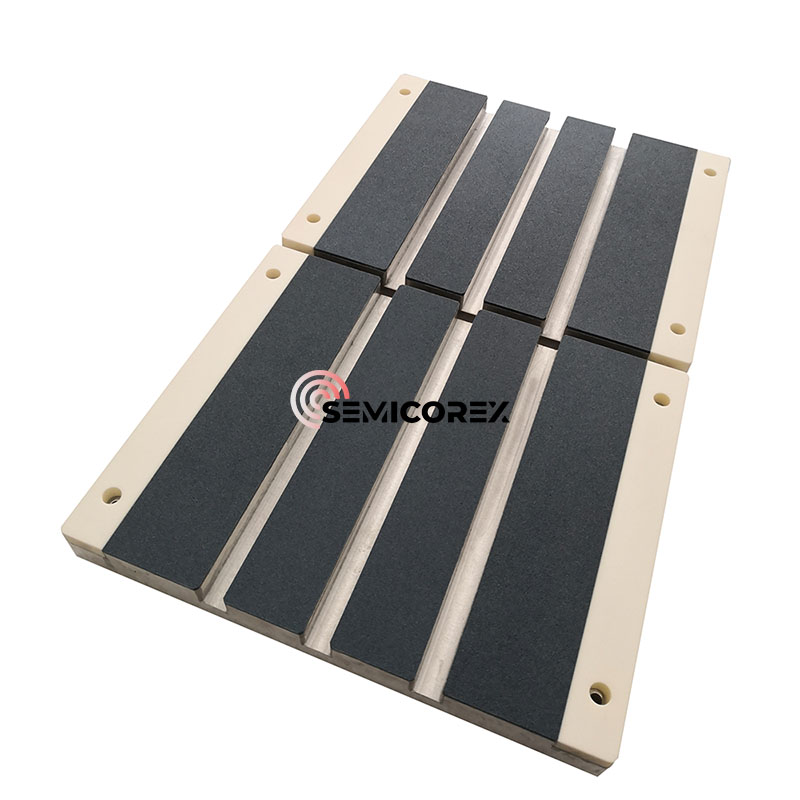
In recent years, with the continuous improvement of the performance and output of chip/thin-film electronic components such as solar cells, light-emitting diodes, semiconductors, and liquid crystal displays, there is an increasing demand for vacuum suction cups for component clamping that provide higher precision and performance.
Porous ceramic vacuum chucks