What is Cassette
2025-03-19
In a semiconductor fabrication (FAB) facility, wafers are transported using various automated mobile tools, such as Automated Guided Vehicles (AGVs), Autonomous Robotic Manipulators (ARMs), and Overhead Transport (OHT) systems. Imagine these wafers taking a bath, being soaked and cleaned as part of the processing. The Front-Opening Shipping Box (FOSB) and Front-Opening Unified Pod (FOUP) can be envisioned as their carriages, with some moving inward and others moving outward. We must also consider the open-top OPEN CASSETTE.
Whether using FOSB, FOUP, OPEN CASSETTE, or other wafer carriers, it is crucial to treat wafers—especially those with a high sensitivity to contamination—very carefully to protect them from any potential damage or defects.
To ensure a safer and more stable transportation process, these wafer carriers should be constructed from appropriate materials. They must also withstand various environmental conditions, such as moisture absorption and high temperatures. Most im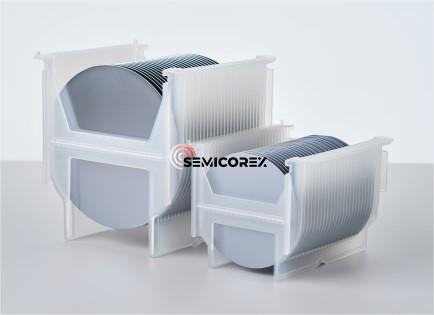 portantly, the interiors of these carriers must maintain extremely high cleanliness and should emit no odors, particularly those that could harm the wafers' integrity.
portantly, the interiors of these carriers must maintain extremely high cleanliness and should emit no odors, particularly those that could harm the wafers' integrity.In semiconductor factories, "cassette" usually refers to a wafer boat, carrier box or material box.
From a functional perspective, it is mainly used to carry and protect semiconductor wafers. Wafers are the basic materials for manufacturing chips and are thin and brittle. Cassettes can fix wafers in a specific position to prevent them from physical damage from the outside, such as collisions and scratches, and ensure the safety of wafers during transportation, storage and processing.
From the perspective of usage scenarios, in various process links of semiconductor manufacturing, such as lithography, etching, ion implantation, etc., cassettes play a role in transporting and transferring wafers between different devices. Different process equipment may have different interface requirements for cassettes to ensure that wafer carrier boxes can be accurately received and placed.
From the perspective of material and design, cassettes are generally made of anti-static materials. This is because the semiconductor manufacturing process is very sensitive to static electricity, which may damage the delicate circuit structure on the wafer. Its internal structure design will be adapted according to the size of the wafer it carries (such as common 8-inch and 12-inch wafers), and there are corresponding slots or fixing devices to ensure the stability of wafer placement.
Semicorex offers high-quality cassettes in semiconductor industry. If you have any inquiries or need additional details, please don't hesitate to get in touch with us.
Contact phone # +86-13567891907
Email: sales@semicorex.com
Email: sales@semicorex.com
Multi-applications of silicon carbide ceramics
SiC Crystal Structure and Defect Control
Related Article
Chip processing requires numerous steps, including wafer cleaning, thermal oxidation, thin film deposition, photolithography, etching, ion implantation, annealing, diffusion, chemical mechanical polishing, and testing, ultimately resulting in a specific integrated circuit structure on the wafer.
Silicon Components in Heat Treatment
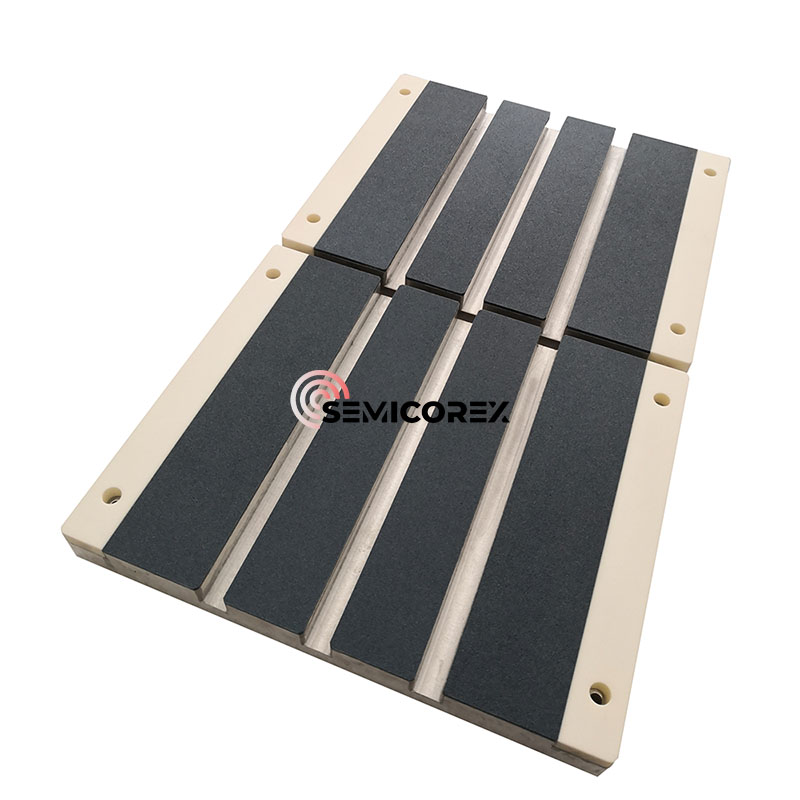
In recent years, with the continuous improvement of the performance and output of chip/thin-film electronic components such as solar cells, light-emitting diodes, semiconductors, and liquid crystal displays, there is an increasing demand for vacuum suction cups for component clamping that provide higher precision and performance.
Porous ceramic vacuum chucks