Porous ceramic vacuum chucks
2025-06-06
In recent years, with the continuous improvement of the performance and output of chip/thin-film electronic components such as solar cells, light-emitting diodes, semiconductors, and liquid crystal displays, there is an increasing demand for vacuum suction cups for component clamping that provide higher precision and performance. The vacuum suction cup is connected to the vacuum equipment through a connecting pipe. When the vacuum suction cup contacts the object to be processed, such as a chip/thin-film material, the vacuum equipment starts to work, causing negative pressure to be generated in the vacuum suction cup. The object to be processed is firmly attached to the vacuum suction cup under the action of atmospheric pressure, and the corresponding processing operation can be performed on the object to be processed. When the object to be processed is processed, the vacuum equipment stops working and slowly inflates the vacuum suction cup. The object to be processed is automatically separated from the vacuum suction cup, completing the clamping, processing, and handling of the object to be processed.
Traditional vacuum chucks are through-hole metal chucks, such as aluminum alloy, stainless steel, etc. Due to the large size of the adsorption hole, when the sheet/thin film components are adsorbed and fixed, the gas pressure will cause the thin sheet or film material to produce local elastic deformation near the adsorption hole, which will have an adverse effect on subsequent processing operations such as circuit printing. At present, porous ceramics with micron-level pores are usually used as vacuum chucks. At the same time, in order to avoid interference caused by stray light reflected by the chuck during the photolithography processing of electronic components, the color of the vacuum chuck is required to be black.
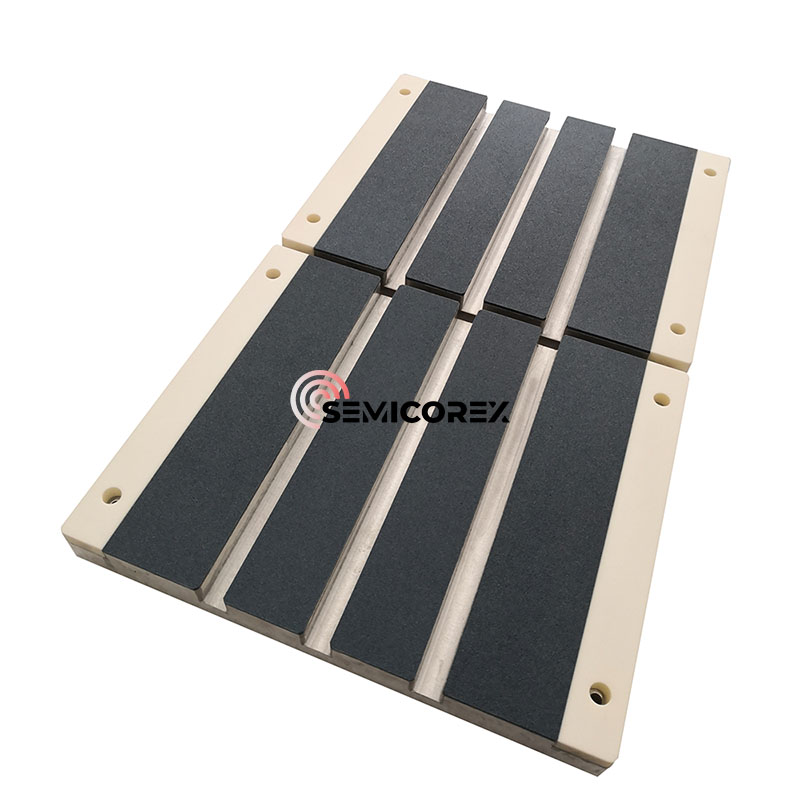
Black alumina ceramics are made of Al2O3 as the main component, transition metal oxides as colorants, and sintering aids, and are sintered at a certain temperature. The colorant is an important component of this type of ceramics and determines the final color. When selecting colorants for this type of ceramics used as vacuum chucks, the coloring degree, mechanical strength, porosity and pore size of the vacuum chuck must be guaranteed.
At present, two-step sintering and one-step sintering methods are commonly used to prepare such ceramics at home and abroad.
The primary synthesis method is to prepare black alumina by directly mixing alumina, coloring oxides, and solvents according to a certain ratio and process. This method is simple, but the ceramic coloring is slightly worse than the secondary synthesis method. The reason is that coloring oxides such as Fe2O3, Cr2O3, CoO, V2O5, NiO and Mn2O3 are highly volatile at high temperatures.
The secondary synthesis method is to first use some metal oxides to synthesize black pigments, and then mix black pigments, solvents, and alumina according to a certain ratio and process to prepare black alumina. This method is relatively complicated and energy-intensive.
Semicorex offers high-quality porous ceramic vacuum chucks based on customers needs. If you have any inquiries or need additional details, please don't hesitate to get in touch with us.
Contact phone # +86-13567891907
Email: sales@semicorex.com
Silicon Components in Heat Treatment
What is PBN crucibles?
Related Article
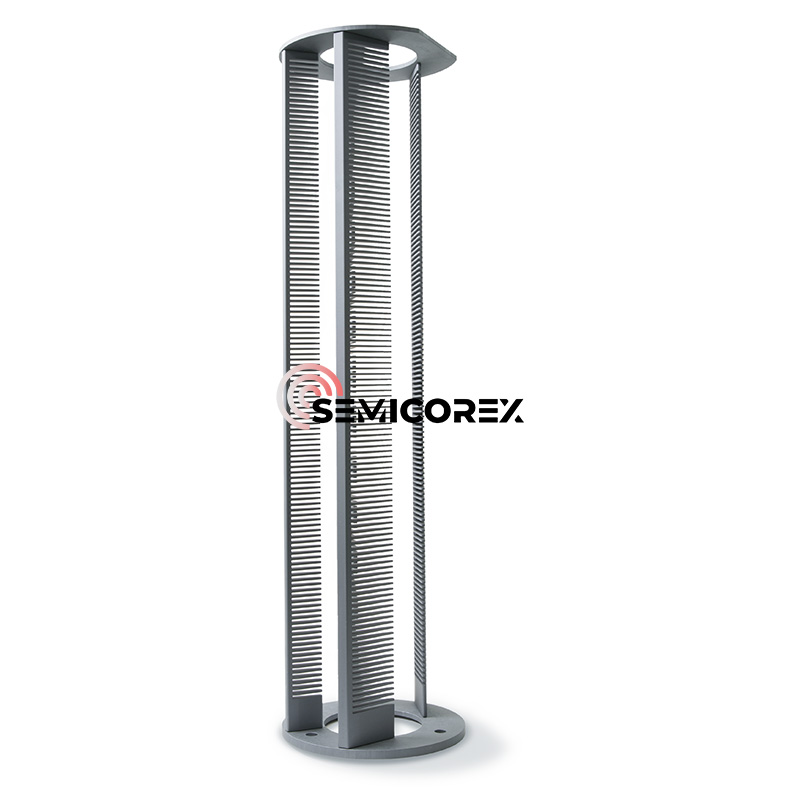
Chip processing requires numerous steps, including wafer cleaning, thermal oxidation, thin film deposition, photolithography, etching, ion implantation, annealing, diffusion, chemical mechanical polishing, and testing, ultimately resulting in a specific integrated circuit structure on the wafer.
Silicon Components in Heat Treatment
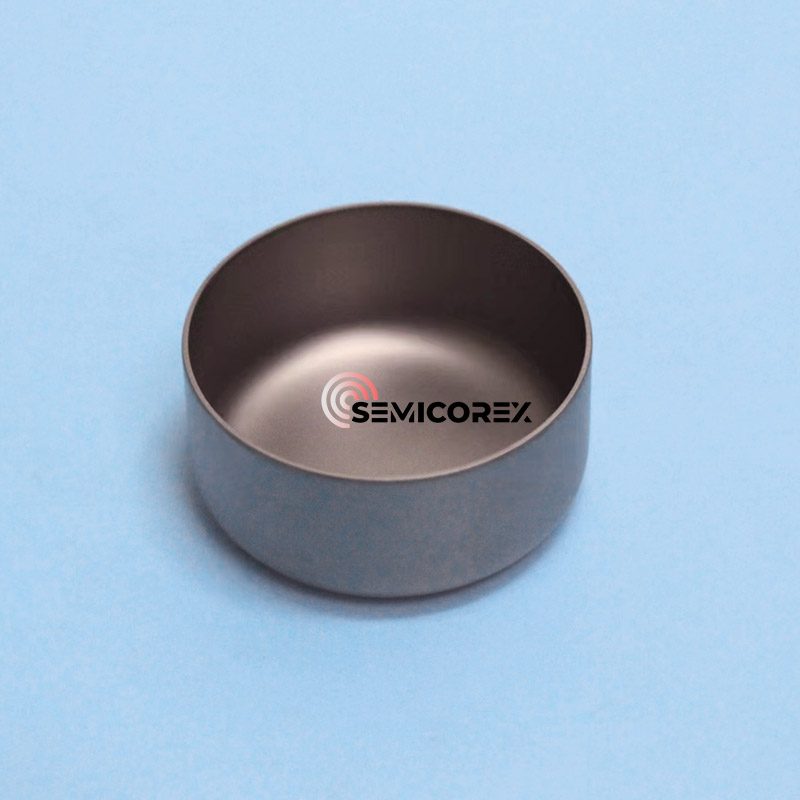
PBN crucibles are usually made by chemical vapor deposition using boron-containing gas (BCl3 or B2H6) as raw material.
What is PBN crucibles?