


Carbon Felt
Quantity:
Carbon Felt
Semicorex carbon felt is a lightweight, flexible, and high-temperature-resistant soft insulation material designed for superior thermal performance in demanding industrial and high-tech applications.
Semicorex carbon felt is a non-woven, high-temperature resistant material engineered for demanding thermal insulation applications. Made from high-purity carbon or pre-oxidized PAN (polyacrylonitrile) fibers through a controlled carbonization process, carbon felt is renowned for its excellent thermal stability, low thermal conductivity, and outstanding chemical resistance. It is a soft, flexible material that combines lightweight properties with the ability to withstand extreme environments, making it a versatile solution across various industries.
Carbon felt maintains structural integrity and thermal insulating performance in temperatures exceeding 2000°C in inert or vacuum atmospheres. It provides a reliable insulation barrier in high-temperature environments such as vacuum furnaces and sintering equipment. As a soft felt, carbon felt is easy to cut, shape, and install. It conforms to complex surfaces and components, ensuring seamless insulation coverage, even in tight or irregular spaces.
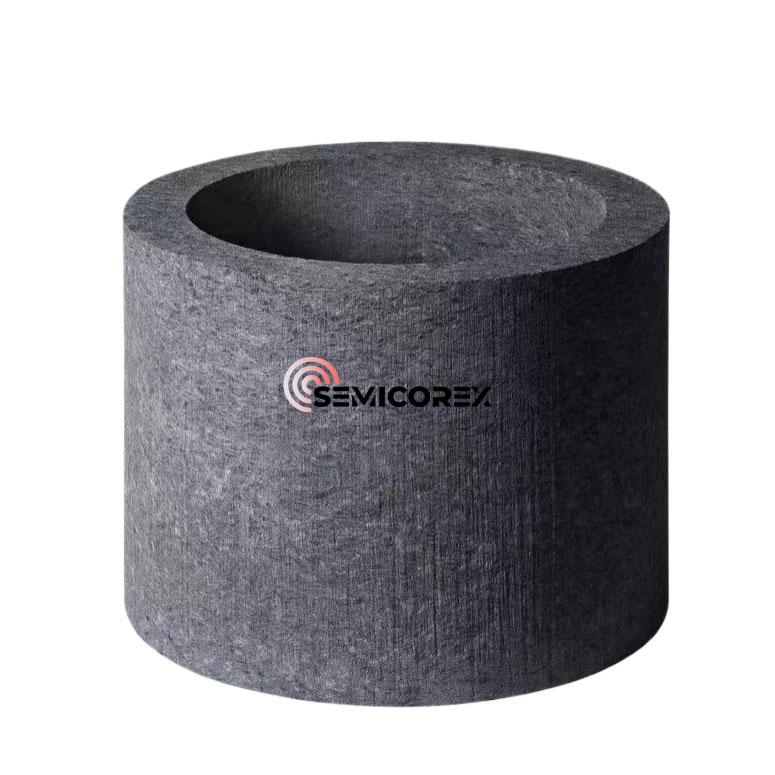
High-purity viscose-based carbon fiber insulation felt is made of high-quality viscose-based short fibers, which are refined through a series of complex processes such as catalytic impregnation, pre-oxidation, carbonization, graphitization and purification. High-purity viscose-based carbon fiber insulation felt not only takes into account thermal insulation performance, but also has internal ash content that can be stably controlled below 20 ppm, and has excellent antioxidant and Si corrosion resistance. As a high-end thermal barrier material, it has obvious advantages in semiconductor thermal field environments such as Si crystal growth furnaces and SiC crystal growth furnaces.
The growth quality of single crystal silicon is directly affected by the thermal field environment, and carbon fiber thermal insulation materials play a key role in this environment. Carbon fiber thermal insulation soft felt still has a significant advantage in the photovoltaic semiconductor industry due to its cost advantage, excellent thermal insulation effect, flexible design and customizable shape. In addition, carbon fiber rigid insulation felt will have greater development space in the thermal field material market due to its certain strength and higher operability. We are committed to research and development in the field of thermal insulation materials, continuously optimizing product performance to promote the prosperity and development of the photovoltaic semiconductor industry.
Applications:
- Vacuum Furnaces and High-Temperature Ovens: Carbon felt is extensively used as a thermal insulation liner in vacuum heat treatment, sintering, and brazing processes. Its low outgassing and ability to perform in ultra-high-temperature environments make it a material of choice in these industries.
- Semiconductor and Photovoltaic Manufacturing: Due to its cleanliness and purity, carbon felt is ideal for use in semiconductor and solar cell production, where contamination must be minimized.
- Aerospace and Defense: The lightweight and thermal shielding properties of carbon felt make it suitable for aerospace thermal protection systems, including insulation layers in spacecraft and reentry vehicles.
- Battery and Energy Storage Systems: Carbon felt also serves as an electrode material and structural support in advanced battery designs, including redox flow batteries, due to its conductivity and chemical inertness.
Laboratory and Industrial Equipment: It can be used as insulation in laboratory furnaces, heating chambers, and other industrial thermal systems where precise temperature control is essential.
Semicorex carbon felt is available in various thicknesses, densities, and roll sizes to meet diverse customer requirements. It can be further processed with surface treatments or laminated with other materials to enhance performance for specific applications. Customization options include cutting, sewing, or layering to suit design specifications.


