
Soft Felt
Carbon fiber soft felt classification:
(1) Pitch-Based Carbon Fiber Felt
Pitch-based carbon fiber is divided into two primary categories: short fibers, which are isotropic pitch fibers, and long fibers derived from mesophase pitch. These materials exhibit unique properties such as high elasticity and excellent thermal conductivity. They are commonly used in applications requiring robust thermal insulation and lightweight materials, such as in robot arms, roller shafts, thermal conductive materials, and brake pads.
(2) Viscose-Based Carbon Fiber Felt
Viscose-based carbon fiber, often known as rayon or viscose fiber, is utilized primarily for thermal insulation and filtration applications. This type of soft felt is effective as an adsorbent material and is often incorporated in CFRP (Carbon Fiber Reinforced Polymer) applications, particularly those requiring thermal resistance and burn-proof properties.
(3) PAN-Based Carbon Fiber Felt
Polyacrylonitrile (PAN)-based carbon fiber felt is known for its high strength and lightweight characteristics, making it suitable for demanding applications in the aerospace, automotive, and sporting equipment industries. However, it is essential to note that PAN fibers can cause skin irritation, necessitating careful handling during production and application.
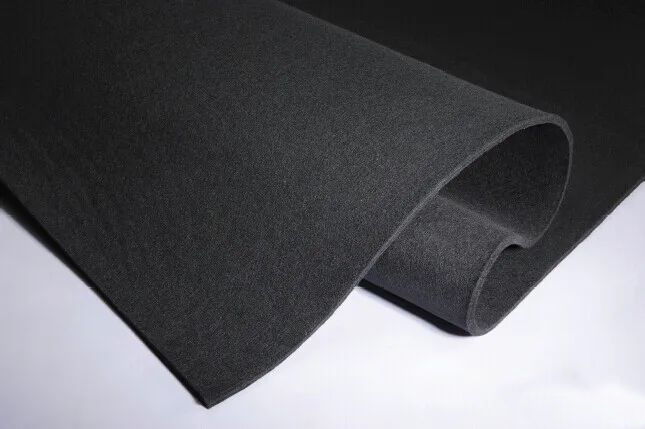
Carbon fiber graphite soft felt is generally made of viscose fiber, PAN fiber and other raw fibers first through non-woven process to make felt, and then through impregnation (mainly viscose base needs to be impregnated), pre-oxidation, carbonization, graphitization, cutting, and finally get the finished product.
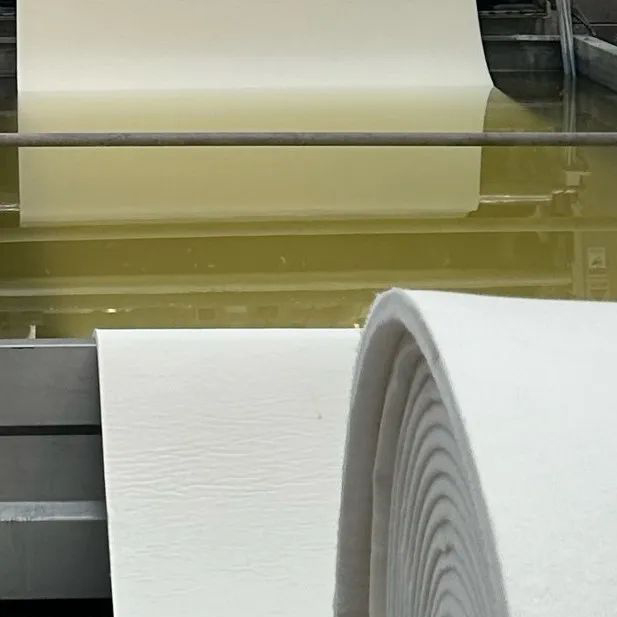
The formation of graphite soft felt is predominantly achieved through the non-woven process at the front end. "Non-woven" encompasses a series of intricate procedures that are crucial to the quality of the final product. For example, as fibers are combed into a web, PAN, and viscose fibers—being thin, lightweight, and relatively dry—often generate static electricity during mechanical processing. This static can impair equipment performance, making it essential to incorporate antistatic agents and effective strategies to minimize its impact.
Numerous laying methods are available for the web, including parallel, cross, combination, and vertical techniques, permitting layers to reach into the dozens. In the acupuncture reinforcement stage, various types of needles, configurations, and processing times can be decisively selected to enhance the product.
These details represent just a portion of the dry web formation and acupuncture reinforcement processes used in non-wovens; the available technical routes are vast and varied.
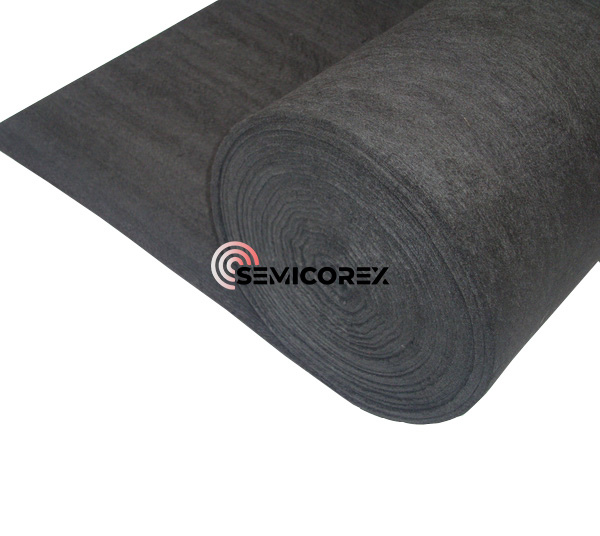
After raw silk fibers are formed, the length, width, and thickness of the graphite soft felt will naturally decrease compared to its pre-oxidation state, due to the progressive reduction of non-carbon elements. Nonetheless, the uncut graphite soft felt remains a substantial material, measuring up to an impressive 40 meters in length and 1.6 meters in width.
Applications
Soft Felt is widely used in various industries due to its unique properties:
● Thermal Insulation: Its exceptional insulation capabilities make it suitable for use in high-temperature furnaces, aerospace components, and automotive applications, where maintaining temperature is critical.
● Filtration and Adsorption: Viscose-based carbon fiber felt is employed in filtration systems and as adsorbent materials, contributing to cleaner environments in various industrial processes.
● Structural Components: In robotics and automotive sectors, soft felt is utilized to enhance the performance and durability of components by reducing weight while providing necessary strength and insulation.
According to the application requirements, the two ends and the uneven parts on both sides of the graphite soft felt can be cut, and it can also be cut into rectangular soft felt, round soft felt with suitable area, and various shapes of blanks for making hard felt.
From the main performance indicators, the density of graphite soft felt is only about 0.10g/cm³, which is about one-tenth of the density of water. The fiber after graphitization is light and thin, and the small space formed between a large number of fibers makes the density of the soft felt so low.
The thermal conductivity of high-purity/high-efficiency viscose-based graphite soft felt is about 0.10-0.15W/m·k at 1150℃. The lower the thermal conductivity, the better the thermal insulation performance.
Why Semicorex
At Semicorex, we prioritize both performance and purity in our materials. Our soft felt has been developed to ensure that impurity levels remain under 20 ppm, making it the ideal solution for demanding applications such as SiC crystal growth. With an annual production capacity of up to 100 tons, we are well-positioned to meet the growing needs of industries that require reliable, high-performance thermal insulation materials. By choosing Semicorex, customers benefit from our commitment to quality and innovation in the field of advanced materials.

Thermal Insulator
Model NO.:Thermal Insulator

Carbon Felt
Model NO.:Carbon Felt

Insulation Felt
Model NO.:Insulation Felt

Graphite Soft Felt
Model NO.:Graphite Soft Felt

Soft Felt
Model NO.:Soft Felt

Soft Graphite Felt
Model NO.:Soft Graphite Felt
- 1